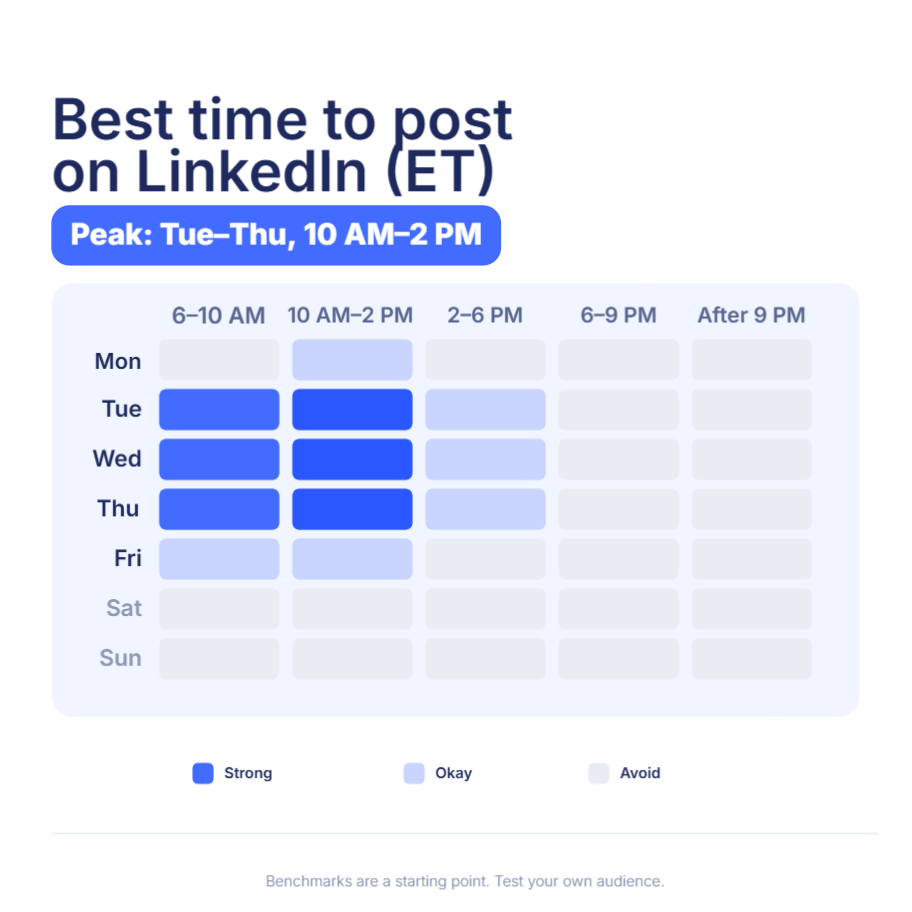
We ran an experiment and found out that the best time to post on LinkedIn in 2026 is Tuesday through Thursday, between 6-10 AM or 10 AM-2 PM Eastern Time. Weekends and late evenings (after 9 PM) consistently underperform. Across our 6-week case study (details below), posts published in this window saw 34.3% more engagement, though content relevance to your audience mattered just as much as timing.
Why Does Timing Matter on LinkedIn?
LinkedIn is a professional network, so activity clusters around work hours rather than evenings or nights, unlike consumer platforms like Instagram or TikTok. Posting when your specific audience is active is a bigger lever for reach than posting frequency alone.
What Are the Best Days to Post on LinkedIn?
Tuesday, Wednesday, and Thursday are the strongest days for LinkedIn engagement. Saturday is the weakest day, and early Monday mornings also underperform as people catch up on their inbox rather than browsing the feed.
What Are the Best Times to Post on LinkedIn?
Two windows perform consistently well, in Eastern Time:
- 6-10 AM: early risers checking LinkedIn before the workday starts
- 10 AM-2 PM: covers common break and lunch hours
Some audiences also see a secondary bump in the late afternoon or early evening, so it’s worth testing if mornings alone aren’t converting for you.
What Times Should You Avoid?
Avoid posting after 9 PM and on weekends, unless your own analytics show your specific audience is active during those windows. General benchmarks are a starting point, not a rule for every account.
How Do You Find Your Own Best Time to Post?
- Check LinkedIn Analytics. A company page or Premium account shows your followers’ location and activity patterns.
- Account for time zones. For a mostly US-based audience, 11 AM-2 PM ET tends to catch lunch breaks. For a global audience, post in the window where the most time zones overlap.
- Review your own top posts. Your highest-performing posts are better data than any industry benchmark, so note the day and time they went out.
Weekly Posting Schedule Example
| Day | Best Posting Times (ET) |
|---|---|
| Monday | 11 AM, 2 PM, 4 PM |
| Tuesday | 6-8 AM, 10 AM-12 PM, 2 PM |
| Wednesday | 9 AM-12 PM, 2 PM |
| Thursday | 10 AM, 12 PM, 2 PM |
| Friday | 8-11 AM, around 12 PM |
Our 6-Week Case Study: Testing Posting Times in the Software Engineering Niche
We didn’t want to just repeat industry benchmarks, so we ran our own test.
Methodology: Starting August 2026, we tracked engagement across three LinkedIn accounts in the software engineering niche over six weeks:
- Account 1: 1,327 connections
- Account 2: 900 connections, but a very highly targeted audience
- Account 3: 837 connections
Instead of posting at one fixed time, we alternated posting hours between 9 AM and 5 PM across all seven days of the week, so every hour in that range got tested across the six weeks. We tracked total engagement (likes plus comments) per post and mapped each post’s performance back to the time slot it went out in.
What we found:
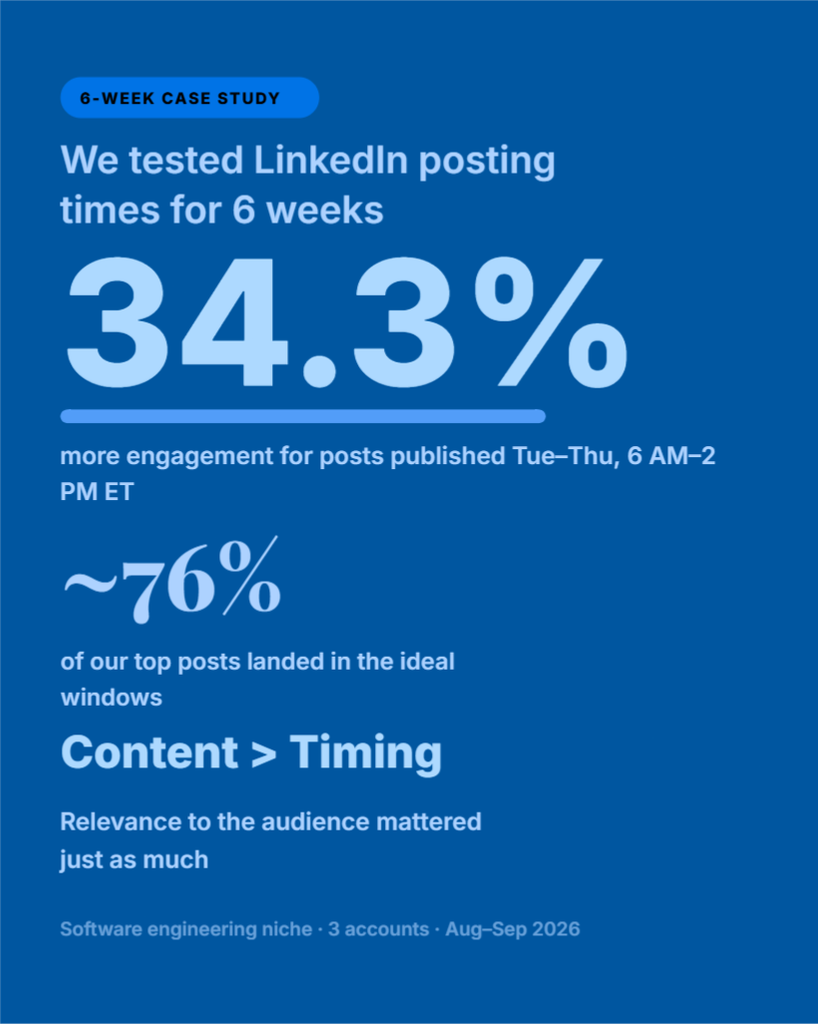
- Around 76% of our highest-engagement posts fell within the Tuesday-Thursday, 6-10 AM and 10 AM-2 PM windows outlined above, broadly confirming the general guidance, though not perfectly.
- Posts published inside those windows saw 34.3% more engagement (likes plus comments) on average than posts published outside them.
- The biggest confound we found: timing mattered less than content relevance. A handful of our best-performing posts landed outside the “ideal” windows entirely, and a few posts inside the ideal windows still underperformed. The common thread was how relevant the content was to our specific audience, not just when it went out. This showed up most clearly on Account 2, where the smaller but highly targeted audience often out-engaged posts from the larger accounts regardless of posting time.
That last point lines up with how LinkedIn’s own Feed ranking actually works. In LinkedIn’s March 2026 engineering writeup on its rebuilt Feed system, the company explained that its updated ranking model uses semantic relevance, meaning how closely a post’s content maps to a member’s interests and engagement history, as a core signal, moving beyond simple recency or keyword matching. In practical terms, LinkedIn’s algorithm is actively trying to match content to interested readers regardless of exactly when it was posted, which is likely why our timing effect, while real, was smaller than content relevance as a driver of engagement.
Our takeaway: treat the Tuesday-Thursday window as a real, measurable advantage worth designing your posting schedule around, but not a substitute for writing something your specific audience actually wants to engage with.
Does Scheduling a Post Hurt Its Reach?
No. There’s no evidence that scheduling a post, through LinkedIn’s native tool or a third-party scheduler, reduces reach compared to posting live. What matters is when the post goes out, not how it was queued.
How Do You Get More Reach at the Right Time?
- Reply to comments in the first hour. Early engagement is one of the strongest signals for wider distribution.
- Match timing to audience type. B2B audiences respond best during work hours (9 AM-5 PM). B2C audiences often engage more around lunch and after work.
- Post consistently. A good time posted regularly beats a “perfect” time posted sporadically.
FAQ
What is the single best time to post on LinkedIn? There isn’t one universal best time. Tuesday through Thursday, 10 AM-2 PM Eastern, is the most consistently cited window across 2026 studies, but the exact best hour varies by audience.
What day gets the least engagement on LinkedIn? Saturday consistently has the lowest engagement, with early Monday close behind.
Does posting time matter more than content quality? No. Timing affects initial visibility, but content quality and early engagement (comments in the first hour) drive how far a post actually spreads.
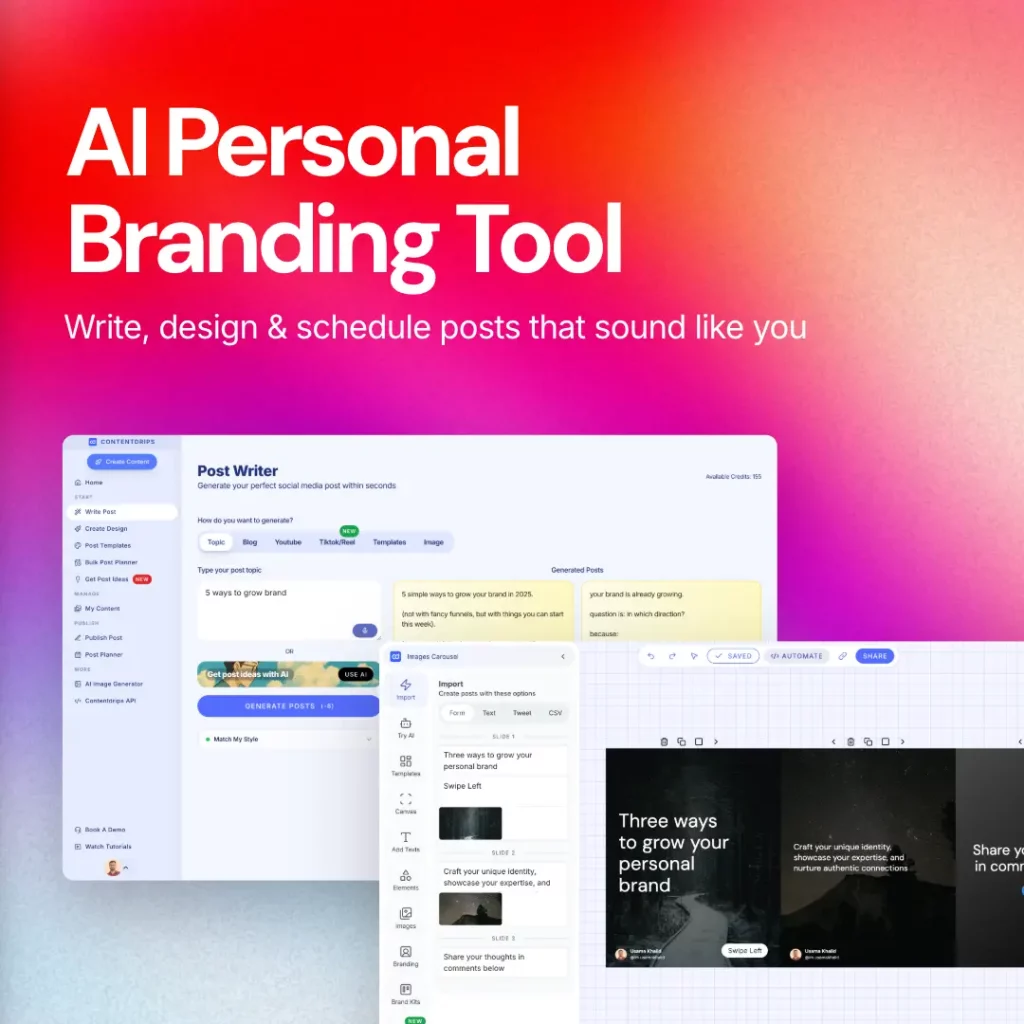
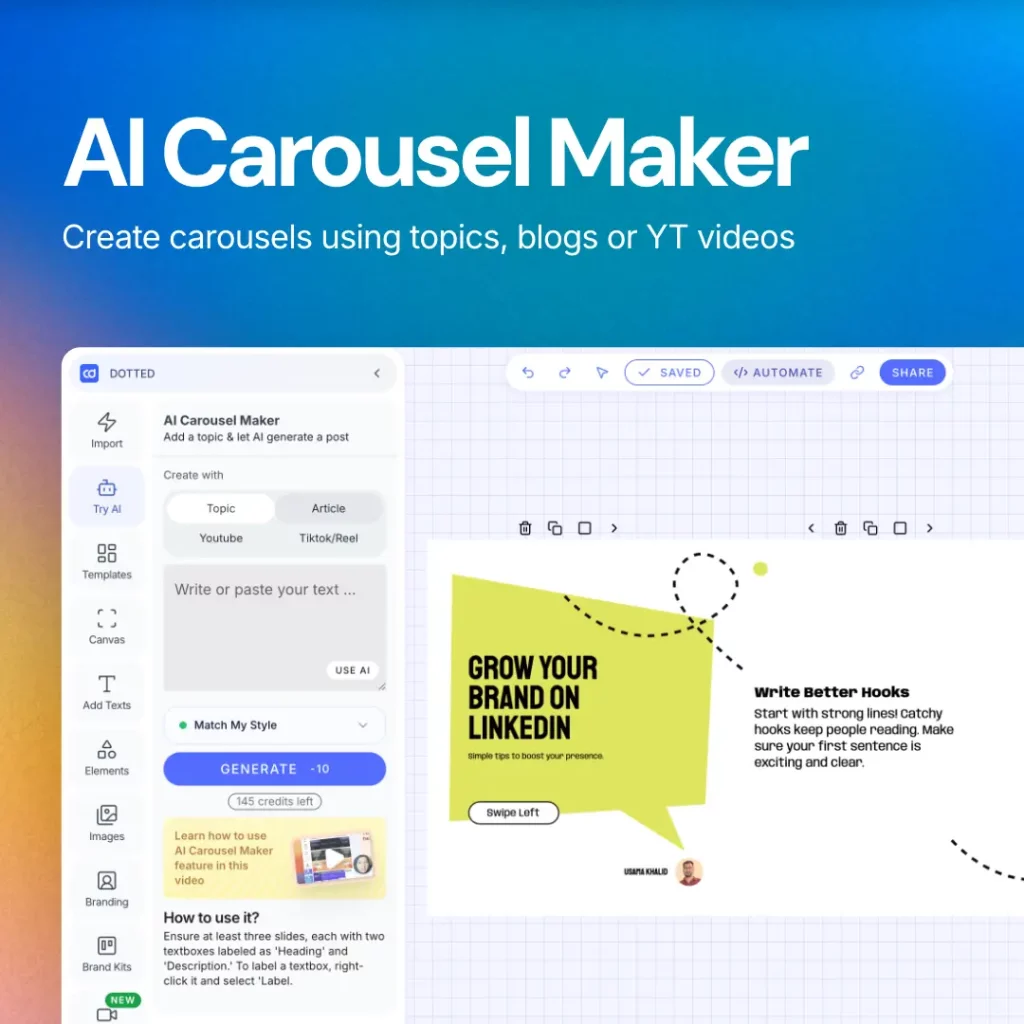
Is LinkedIn’s native scheduler good enough, or do I need a third-party tool? LinkedIn’s native scheduler covers basic one-at-a-time scheduling. Third-party tools add bulk scheduling, a visual calendar, and, in tools like Contentdrips, AI writing and design built in.
Does timing actually make a measurable difference, or is it overstated? In our own 6-week case study across three software engineering accounts, posts in the Tuesday-Thursday, 6-10 AM/10 AM-2 PM window saw 34.3% more engagement than posts outside it. But content relevance to the audience was an equally important factor, and some of our best posts broke the “rules” entirely.
Want to stop guessing and just stay consistent?
Once you know your best windows, the LinkedIn Scheduler lets you write, design, and queue weeks of posts in one sitting.
Posting to LinkedIn and Instagram? The AI Social Media Scheduler generates and bulk-schedules two weeks of content across both platforms from a set of content pillars.