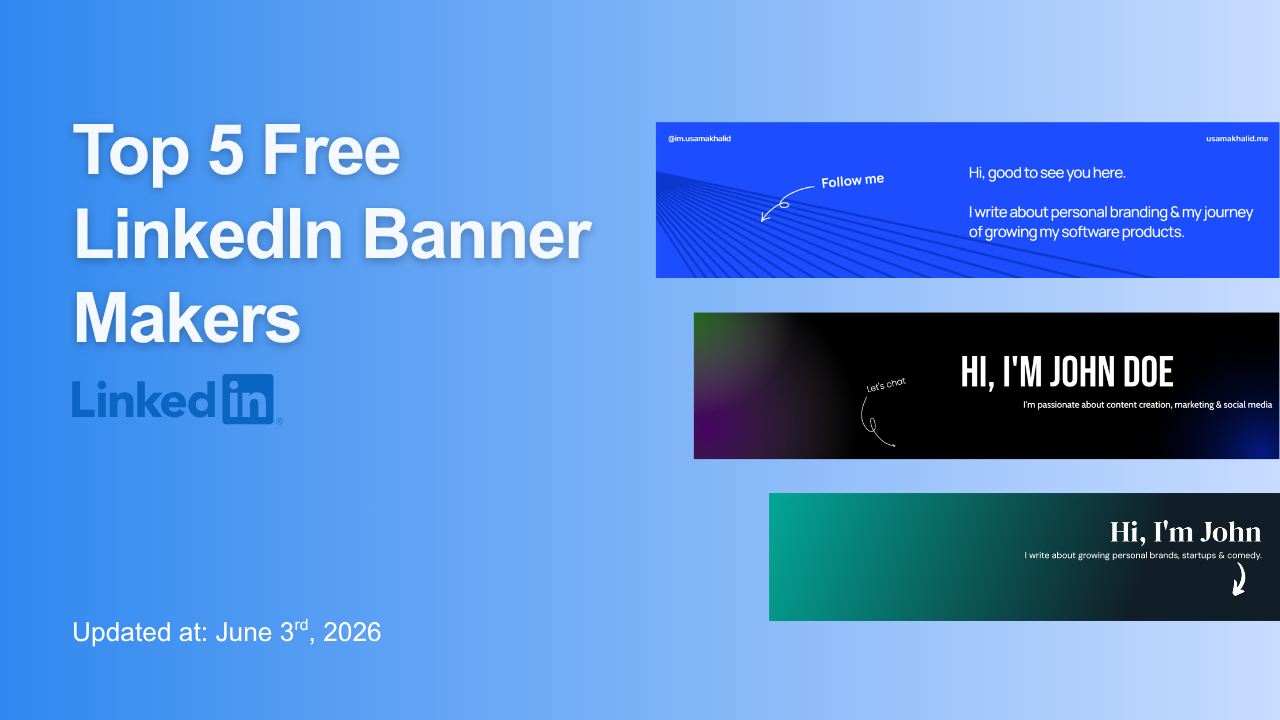
In this blog, we’ll explore the top 5 free LinkedIn banner makers. We’re also sharing practical tips for designing effective banners and optimizing your LinkedIn profile.
Notably, all these tools come with free plans, ensuring that the journey to a compelling LinkedIn banner is both effective and accessible to all.
Your LinkedIn banner is your opportunity to make a strong initial impact in the professional world. Not only does it draw attention to your profile, but it also opens doors for networking and career growth.
Why Does a Captivating LinkedIn Banner Matter?
Your LinkedIn banner needs to be captivating because it’s the first thing people notice on your profile. It’s like a virtual introduction that shows you’re professional and gives a personal touch.
Think of it as a quick and impactful way to tell others about your professional identity and make them want to connect with you.
Plus, when your banner stands out, more people are likely to notice your profile, creating more opportunities for networking and career growth. It’s not just a picture; it’s your chance to make a strong first impression in the professional world.
Free LinkedIn Banner Makers
1. Contentdrips — contentdrips.com
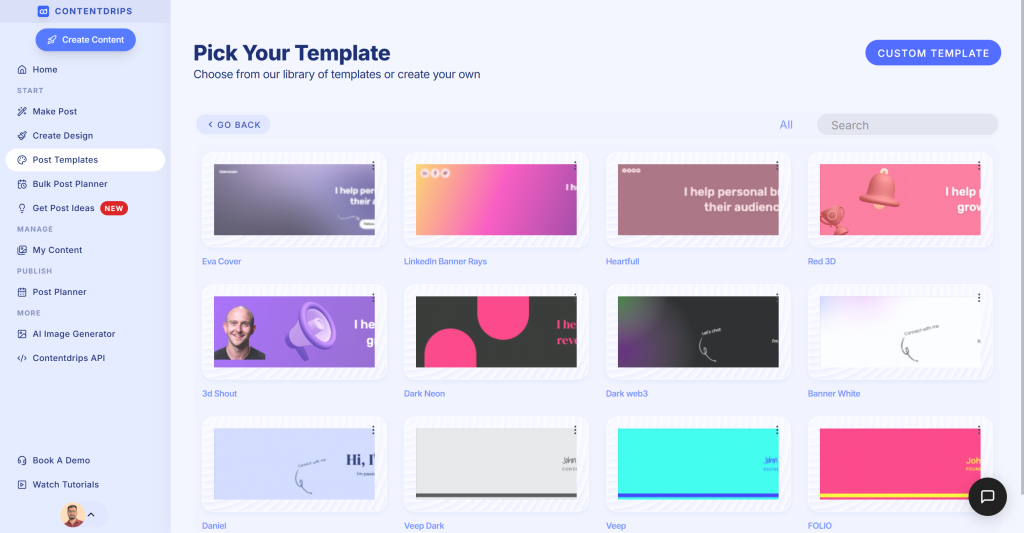
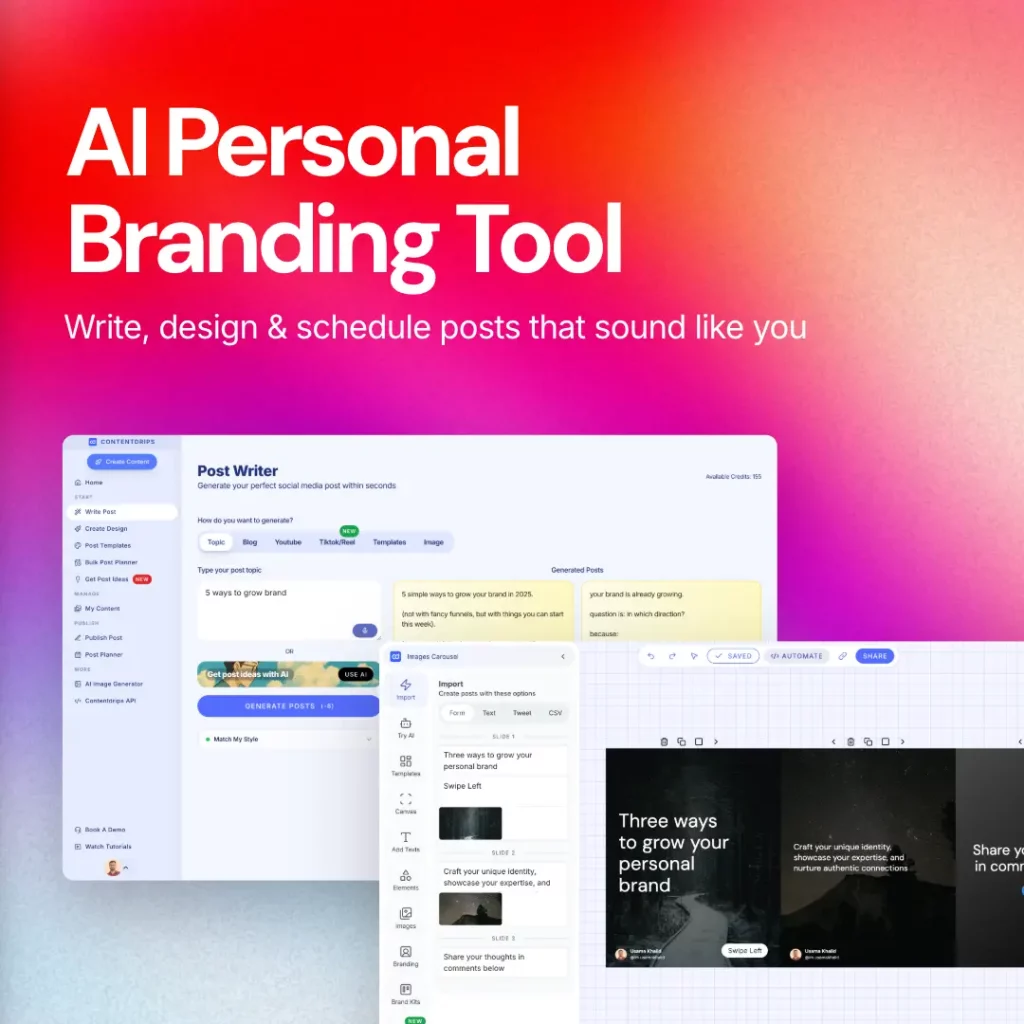
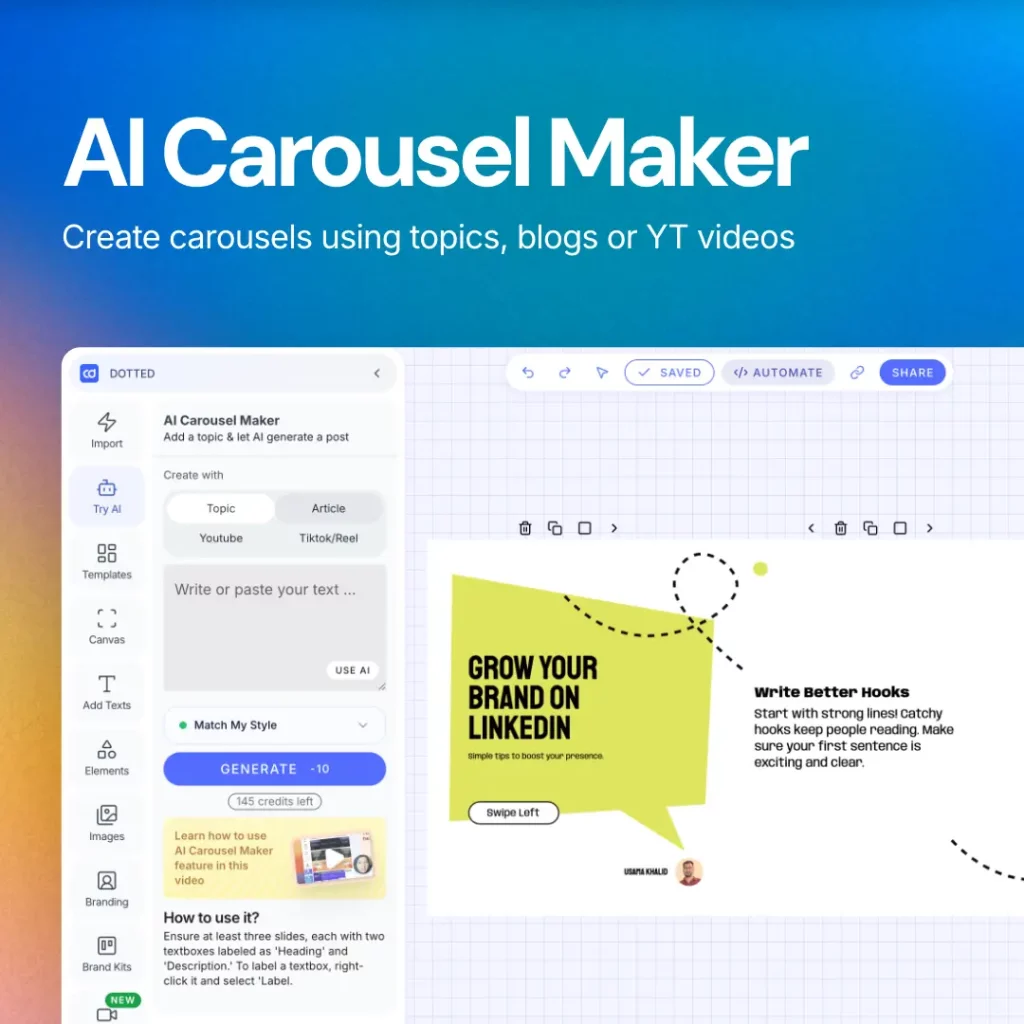
Contentdrips is a specialized tool that helps you create eye-catching LinkedIn banners to boost your profile and get more connections. It’s all about making your personal brand shine with unique and high-performing banner templates.
Try the Contentdrips LinkedIn banner maker to build a polished profile header in minutes.
Your LinkedIn banner is the first thing people notice, and Contentdrips makes sure yours leaves a positive impression. The tool keeps it simple, offering easy-to-use templates that let you get started in minutes without any design experience.
Contentdrips goes well beyond a basic banner maker. Here’s why it stands out for professionals who are serious about their LinkedIn presence:
Hundreds of LinkedIn Banner Templates Choose from a wide library of professionally designed templates built specifically for LinkedIn’s dimensions and personal branding needs. Whether you’re a founder, freelancer, job seeker, or corporate professional, there’s a template that fits your brand.
Bulk Banner Creation with CSV Import Managing a team or agency? Contentdrips lets you create banners in bulk using CSV import, so you can produce personalised banners for your entire team at once without designing each one manually. This is a game-changer for marketing teams, recruiters, and agencies managing multiple LinkedIn profiles.
AI Design Agent Built Right Into the Editor Contentdrips features an AI Design Agent inside the editor. Think of it as a chat-based AI that helps you customise or build your banner just by having a conversation with it. Describe what you want, tweak the output, and get a polished result without touching a single design tool. It’s like having a designer on call, 24/7.
Contentdrips stresses the importance of professionalism, helping you to create banners that are not only visually appealing but also effective. With Contentdrips, you can easily design banners that reflect your style, make your LinkedIn profile stand out, and attract the right connections.
2. Canva — canva.com
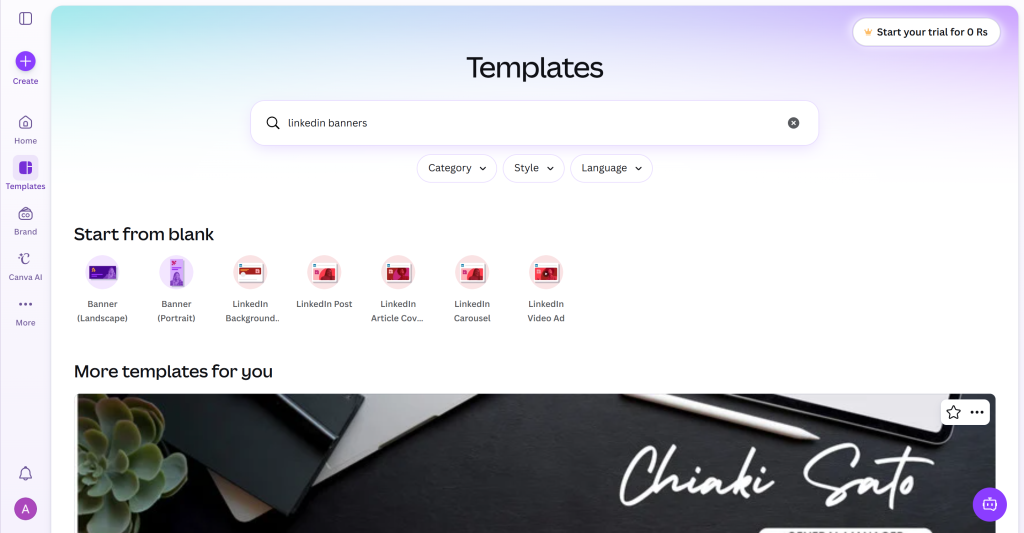
Canva is one of the most widely used design platforms in the world and for good reason. Its LinkedIn banner maker is intuitive, well-stocked with templates, and requires zero design experience to use.
What makes Canva particularly strong is its brand kit feature, which lets you save your colors, fonts, and logos so every design stays consistent. Pre-sized LinkedIn banner templates mean you never have to worry about getting the dimensions right, and the drag-and-drop editor makes customization feel effortless.
Canva also supports real-time collaboration, which is useful if you’re working with a team or getting feedback from a colleague before publishing. The free plan is generous and covers everything most users will need, though premium elements and advanced features sit behind the Canva Pro paywall.
3. Picmaker — picmaker.com
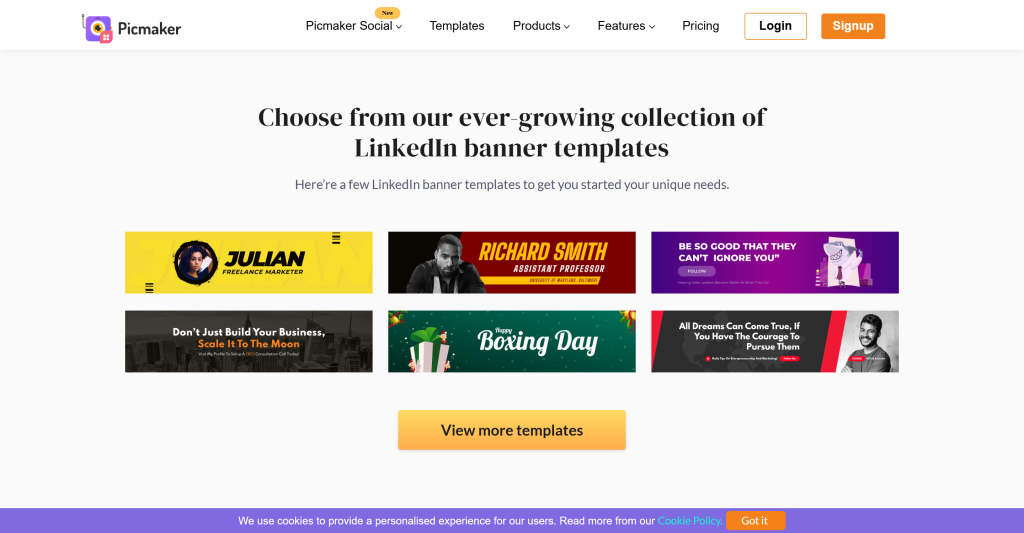
Picmaker is a reliable online LinkedIn banner maker that simplifies the process of designing banners for your profile. Whether you’re a sales rep, a headhunter, a business coach, or a complete beginner, it has a template ready for you. No design skills needed.
What makes Picmaker stand out is the sheer depth of customization it offers. Choose from gradients, images, fonts, and colors to make your banner feel uniquely yours, with access to over 100 million pictures and backgrounds to pull from.
The editor works in three simple steps: launch Picmaker, pick a template from their ever-growing library, and edit. When you’re happy, download in PNG or JPEG and you’re done. It’s also not just a banner tool. It has background removal, photo editing, collages, and posters are all baked in, making it a genuinely useful all-in-one graphic editor.
Picmaker also lets you store your design assets securely and share designs with teammates for feedback in a single click, which is very handy if you’re managing a brand across a team. And yes, the free plan has no watermark on downloads.
4. Venngage — venngage.com
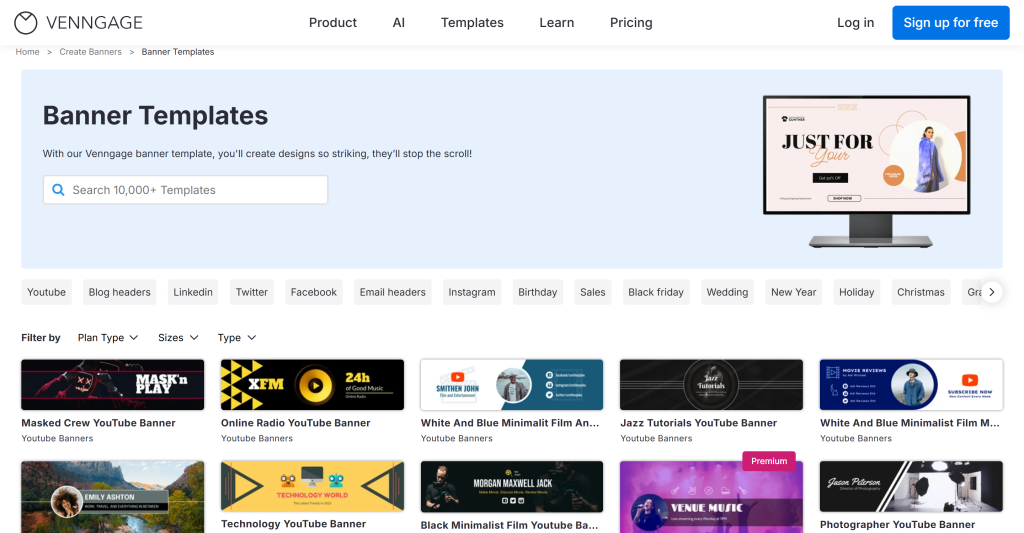
Venngage is a design tool known for its simplicity, and its LinkedIn banner maker is no exception. It’s built specifically with non-designers in mind, offering a clean editing experience and a solid library of customizable templates.
Where Venngage shines is in how beginner-friendly the whole process feels. You pick a template, swap in your details, adjust the colors and fonts, and download. There’s no overwhelming toolbar or complex layer system to navigate.
For professionals who want a polished banner without spending any time learning a new tool, Venngage is one of the most accessible options on this list. The free plan covers the basics well, with premium templates available on paid tiers.
5. Fotor — fotor.com
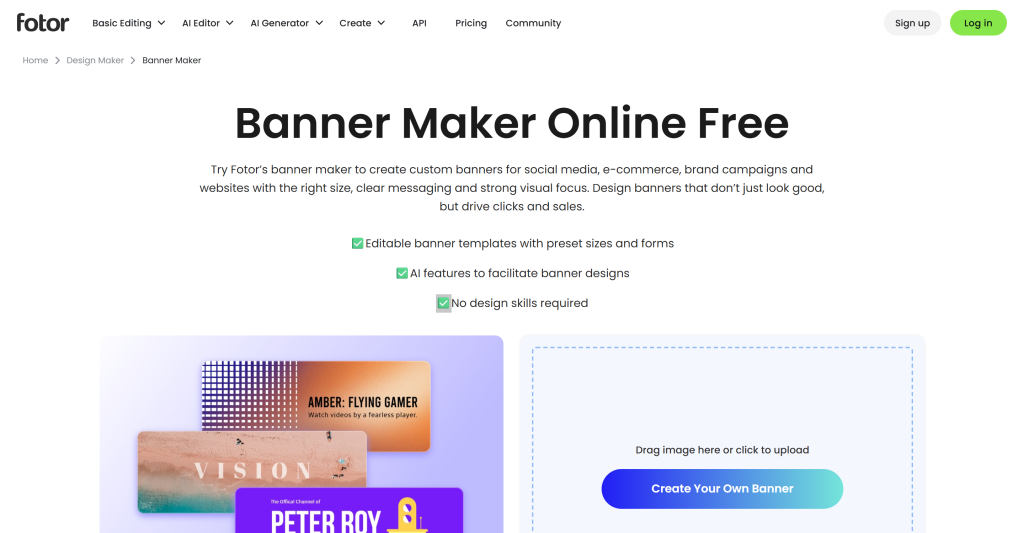
Fotor’s online LinkedIn banner maker is a convenient tool for crafting standout banners that elevate your profile or business page. It offers an array of pre-designed templates spanning various industries, from technology to business.
Fotor’s design process is straightforward, allowing effortless customization. The platform boasts a rich library of high-quality stock photos, fonts, illustrations, icons, emojis, and stickers, providing ample resources to make your LinkedIn banner visually appealing.
Fotor also comes with AI-powered design features that can generate banner visuals from a text prompt which are handy if you want something unique without building it from scratch. Whether you’re aiming to enhance personal branding or business visibility, Fotor equips you with professional templates and design elements to effortlessly create eye-catching LinkedIn banners.
Tips for Designing Effective LinkedIn Banners
- Keep It Simple: Opt for a clean and uncluttered design. Avoid too much text or complex graphics. A simple, focused message is more likely to grab attention.
- Be Consistent with Branding: Ensure your banner aligns with your personal or professional brand. Use colors, fonts, and imagery that reflect your identity to create a cohesive and memorable look.
- High-Quality Imagery: Choose sharp and high-resolution images. Blurry or pixelated visuals can detract from the professionalism of your profile.
- Prioritize Readability: If you include text, make sure it’s easily readable. Choose readable fonts and consider the contrast between the text and background to enhance visibility.
- Highlight Professionalism: Maintain a professional tone in your banner. It’s an extension of your resume, so avoid casual or overly informal elements unless they align with your industry.
- Consider Your Audience: Tailor your banner to your target audience. If you’re job-seeking, focus on professional accomplishments. If you’re networking within your industry, highlight relevant expertise.
- Incorporate a Call-to-Action (CTA): Encourage engagement by including a subtle CTA. It could be as simple as inviting viewers to connect, visit your website, or explore your work.
- Regular Updates: Keep your banner current. If there are changes in your role, achievements, or branding, update your banner to reflect the latest information.
LinkedIn Profile Tips
- Professional Profile Photo: Use a clear, professional headshot.
- Engaging Headline: Craft a compelling headline that highlights your expertise.
- Customized LinkedIn URL: Personalize your URL for easy recognition.
- Informative Summary: Write a concise, keyword-rich summary showcasing your skills and aspirations.
- Key Skills: Add relevant skills to demonstrate your professional strengths.
- Recommendations and Endorsements: Seek recommendations and endorsements for credibility.
- LinkedIn Banner: Create an effective LinkedIn banner that visually complements your profile, communicates your professional identity, and leaves a lasting impression.
- Engage with Content: Regularly share and engage with industry-relevant content to showcase your active involvement.
Frequently Asked Questions About LinkedIn Banners
What is a LinkedIn banner?
A LinkedIn banner (also called a LinkedIn background photo or cover photo) is the large image that sits at the top of your LinkedIn profile, just behind your profile picture. It spans the full width of your profile and is one of the most visible parts of your page, making it prime real estate for personal branding.
What are the ideal dimensions for a LinkedIn banner?
The recommended size for a LinkedIn banner is 1584 x 396 pixels, with an aspect ratio of 4:1. The maximum file size is 8MB, and LinkedIn supports JPG, PNG, and GIF formats (non-animated). If you use a tool like Contentdrips, the dimensions are already pre-set so you never have to worry about cropping.
Should I use a photo or a graphic design for my LinkedIn banner?
Both can work, but a graphic design with text and branding elements tends to perform better for personal branding purposes. A photo works well if it’s contextually relevant. For example, a speaker on stage, or a professional in their work environment. Avoid generic stock photos or landscape imagery that says nothing about who you are.
What should I include in my LinkedIn banner?
Your banner should communicate your professional identity at a glance. Consider including:
- Your name or tagline
- Your job title or area of expertise
- A clear CTA (e.g., “Open to Opportunities” or “Let’s Connect”)
- Your brand colors and logo (if applicable)
- A website URL or social handle
Avoid cluttering it. One focused message is more powerful than five competing ones.
What should I NOT put on my LinkedIn banner?
- Too much text is a dealbreaker. Keep it scannable
- Low-resolution or pixelated images
- Personal photos that aren’t professionally relevant
- Overly busy backgrounds that make text hard to read
- Outdated information (old job titles, past company logos)
- Contact details that aren’t appropriate for a public profile
How often should I update my LinkedIn banner?
Update your LinkedIn banner whenever there’s a meaningful change in your career, brand, or goals. A good rule of thumb is to review it every 3–6 months or when you change roles, launch a new project, start job searching, or rebrand yourself.
What colors work best for a LinkedIn banner?
Stick to 2–3 colors maximum that align with your personal or company brand. High-contrast combinations (dark background with light text) improve readability. Blues, grays, and neutrals tend to read as professional. Avoid neon or overly saturated palettes unless they’re a deliberate part of your brand identity.
What font styles should I use on my LinkedIn banner?
Use clean, legible sans-serif fonts like Inter, Montserrat, or Lato. Avoid decorative or script fonts for any key text, as they’re hard to read at smaller sizes. Keep your font count to two: one for headings and one for body or supporting text.
Does a LinkedIn banner help with job searching?
Absolutely. A well-crafted banner signals to recruiters that you take your professional presence seriously. It reinforces your personal brand, makes your profile more memorable, and can communicate key information like your availability or area of expertise, before a recruiter even reads your headline.
Can I use the same banner for LinkedIn and other platforms?
You can use the same visual identity, but you’ll need to resize the design for each platform. LinkedIn banners (1584 x 396px) have a very different aspect ratio from Twitter/X headers (1500 x 500px) or Facebook covers (820 x 312px). Tools like Contentdrips make it easy to resize and adapt your designs across platforms.
What’s the difference between a LinkedIn banner and a LinkedIn background photo?
They’re the same thing but with just different names for the same feature. “Banner,” “background photo,” and “cover photo” are all used interchangeably to refer to the wide image at the top of your LinkedIn profile.
Do I need design skills to make a LinkedIn banner?
No. Tools like Contentdrips, Canva, and Venngage are designed for people without a design background. With ready-made templates and drag-and-drop editing; in Contentdrips’ case, an AI Design Agent you can chat with directly and anyone can create a professional-quality banner in minutes.
Is a LinkedIn banner free to make?
Yes. All five tools covered in this post: Contentdrips, Canva, Dreamina, Venngage, and Fotor, offer free plans that let you design and download a LinkedIn banner without paying anything. Some premium templates and features may require a paid plan, but the free tiers are more than sufficient for most users.
Can I add a call-to-action to my LinkedIn banner?
Yes, and you should. A subtle CTA such as “DM me to connect,” “Visit my portfolio,” or “Available for freelance work” can drive real action from people who land on your profile. Keep it short, place it in a readable area of the banner, and make sure it aligns with your current professional goals.
What makes a LinkedIn banner look unprofessional?
Common mistakes include: using a blurry or stretched image, having too much text, choosing clashing colors, leaving the default gray background LinkedIn provides, or using a design that has nothing to do with your industry or role. Any of these can undermine the impression you’re trying to create.
Can I create a LinkedIn banner on my phone?
Yes. Canva and Fotor both have mobile apps that let you design on the go. Contentdrips and Dreamina are also accessible via mobile browser. That said, for precise editing and fine-tuning, a desktop experience is generally more comfortable.
What’s the best LinkedIn banner style for someone who is job searching?
Keep it professional and focused. Include your name, your area of expertise or target role, and a short CTA like “Open to Opportunities.” Use clean colors and avoid anything too casual. The goal is to immediately communicate what you do and what kind of role you’re looking for.
Should my LinkedIn banner match my resume or website?
Ideally, yes. Consistent branding across your resume, LinkedIn, personal website, and other professional touchpoints makes you look polished and intentional. Use the same color palette, fonts, and general visual tone across all of them.
Conclusion
As we wrap up, it’s worth highlighting the tools we explored: Contentdrips, Canva, Dreamina, Venngage, and Fotor. These platforms aren’t just user-friendly; they’re free, offering you a chance to stand out professionally and create a lasting impression.
We also talked about some tips on how to make effective LinkedIn banners, such as keeping it simple, being consistent with branding, and incorporating a call-to-action. And tips on making a good LinkedIn profile.
Ready to make your profile pop? Start crafting your perfect LinkedIn banner today!