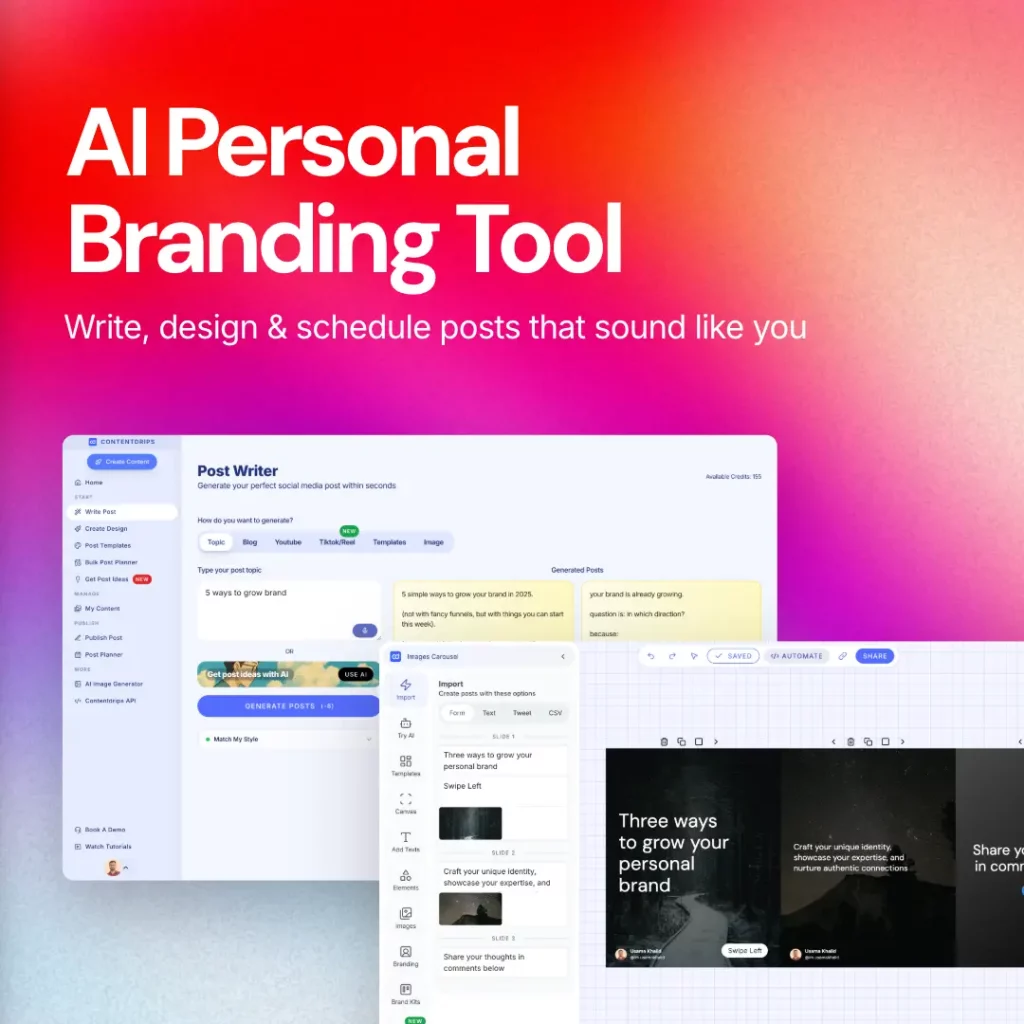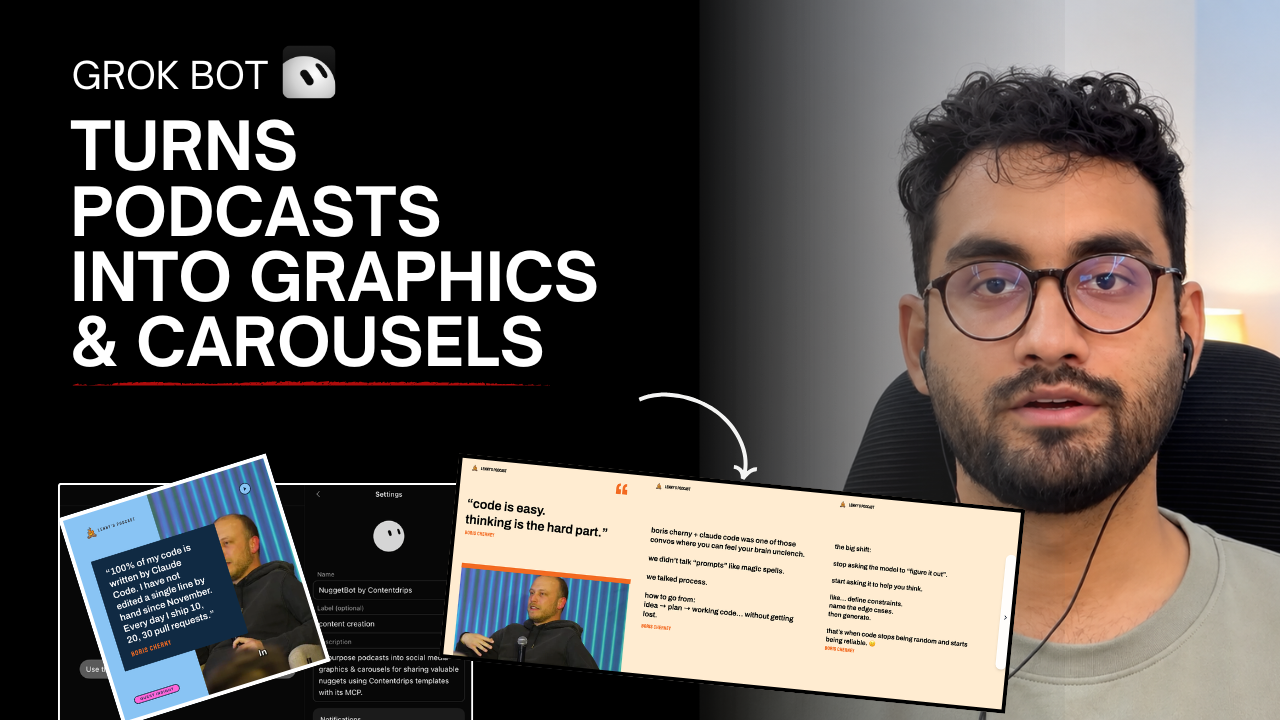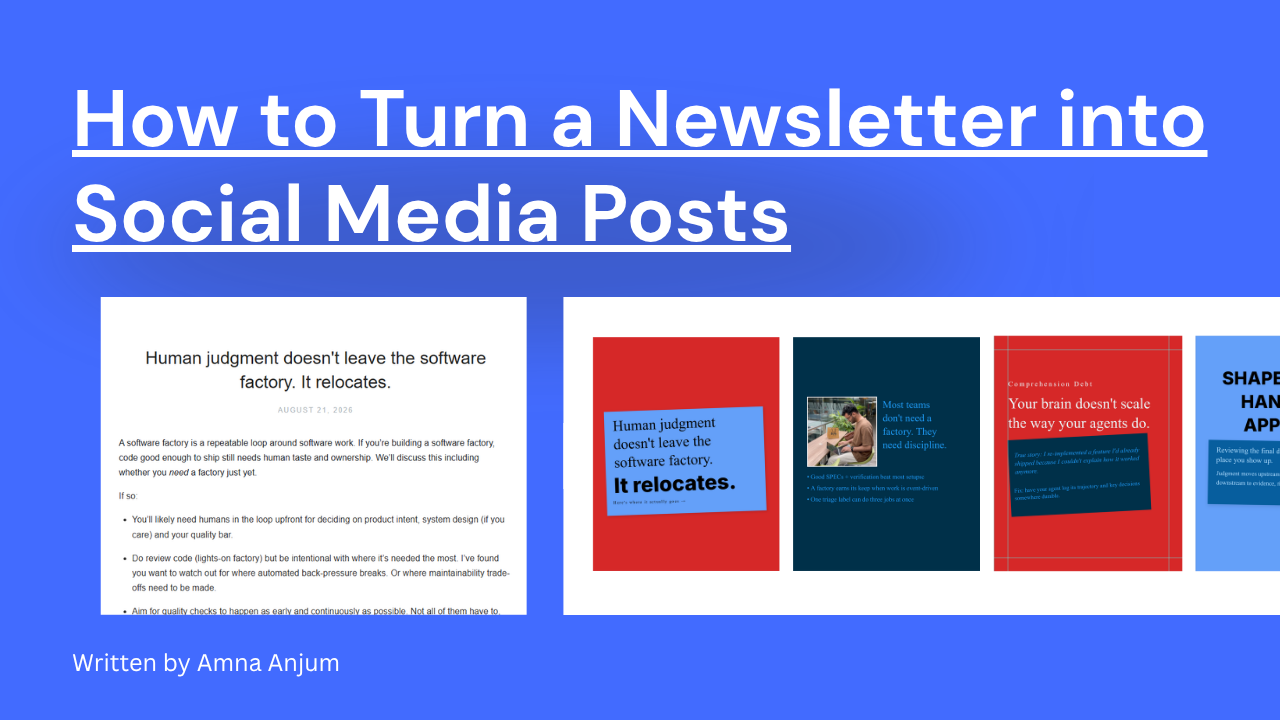
Creating carousels one by one still eats hours. The faster path is to write the slide copy with Claude or ChatGPT, then let Contentdrips turn that copy into branded LinkedIn and Instagram carousels in bulk.
The key change since we first published this guide: you no longer dig through a separate CSV tool. Inside the editor, hit the Automate button. It gives you a prompt matched to your template labels, so Claude or ChatGPT outputs a CSV that drops straight into Contentdrips.
Watch the full workflow
This walkthrough shows the Automate button, the CSV prompt for Claude, Import, Generate, and download — end to end.
Step 1: Build a labeled carousel template
Open Contentdrips and create (or pick) a multi-slide carousel template. Label every text box you want AI to fill later — things like heading, description, slide_title, or cta_button.
You can design the template by hand, or use the AI Agent to generate a layout and add labels for you. Once the labels are set, the Automate prompt will match those exact fields.
Step 2: Open Automate and copy the CSV prompt
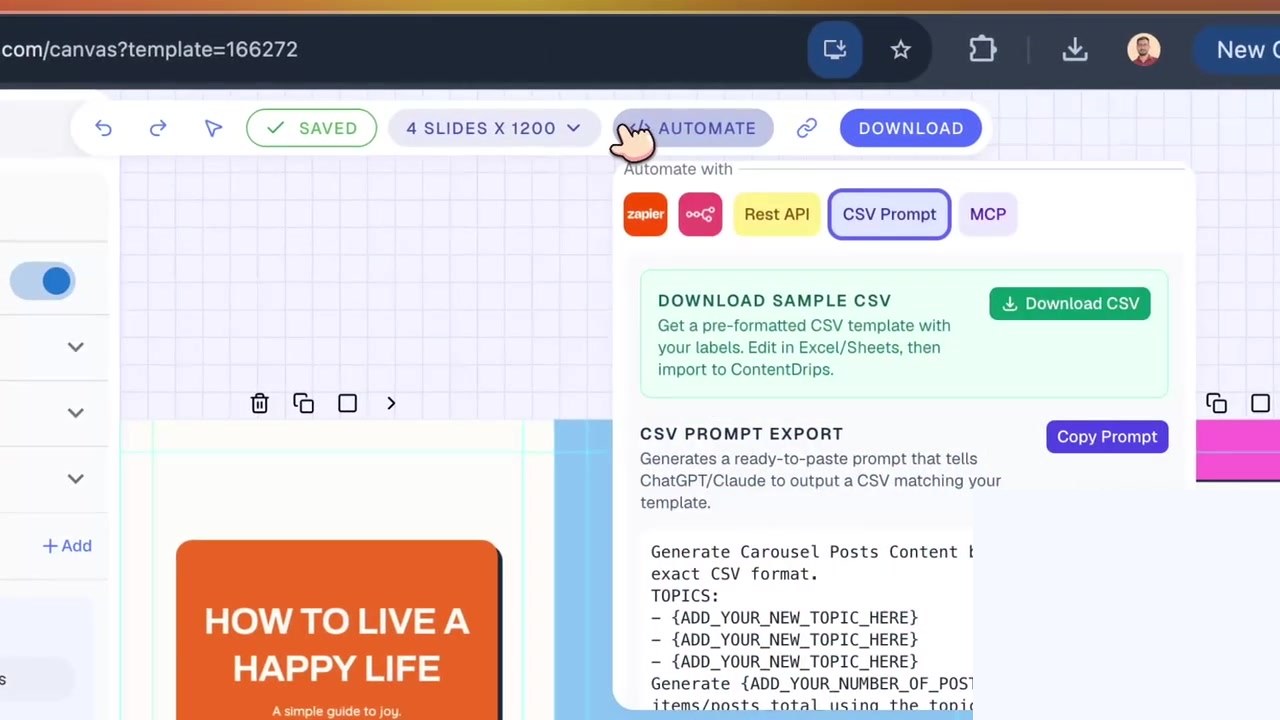
In the canvas toolbar, click Automate. You will see options for Zapier, Make, Rest API, MCP, and CSV Prompt.
Stay on CSV Prompt. Two shortcuts matter:
- Download CSV — a sample file already shaped for this template’s labels. Useful if you want to edit in Sheets first.
- Copy Prompt — a ready-to-paste prompt that tells ChatGPT or Claude to output a CSV matching this exact template.
Step 3: Generate the CSV with Claude or ChatGPT
Paste the copied prompt into Claude or ChatGPT. Swap in your topics and how many posts you want. Ask for a downloadable CSV (not only a code block).
The current Contentdrips CSV format uses one row per labeled field:
Item ID,Item Name,Slide,Label,Type,Value
1,Topic 1 - Item 1,intro,heading,text,"Things I wish I knew starting out"
1,Topic 1 - Item 1,intro,description,text,"Sales requires hard work and dedication"
1,Topic 1 - Item 1,1,heading,text,"Tip heading goes here"
1,Topic 1 - Item 1,1,description,text,"Tip body text goes here"
1,Topic 1 - Item 1,outro,description,text,"Found this helpful? Tell me in the comments"
2,Topic 2 - Item 1,intro,heading,text,"Another carousel heading"
...
Slide values are intro, slide numbers like 1 / 2, or outro. Label values must match your template labels (for example heading, description, description_1). That is why copying the Automate prompt beats hand-building a generic CSV.
Need topic ideas first? Ask Claude or ChatGPT: “Suggest 10 LinkedIn/Instagram carousel topics for [your niche],” then feed those topics into the Automate prompt.
Step 4: Import the CSV in the editor
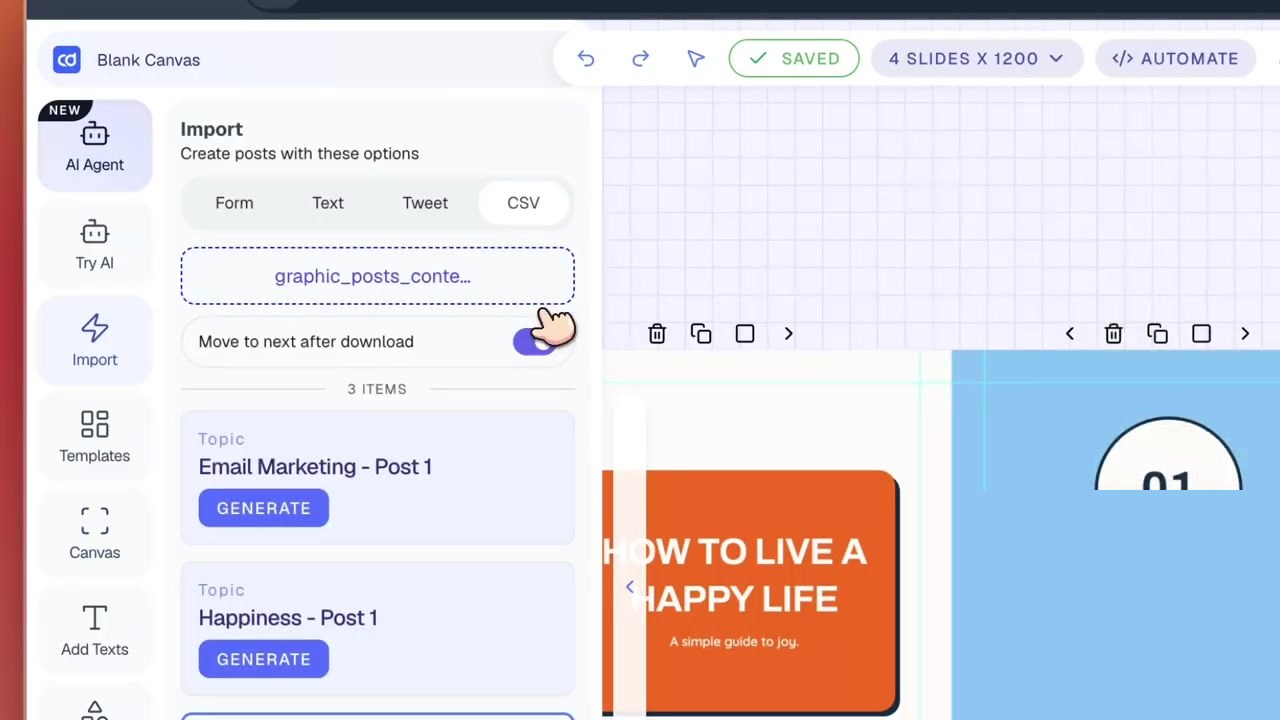
Back in Contentdrips, open the left sidebar and choose Import → CSV. Upload the file Claude or ChatGPT produced.
Contentdrips lists each topic as an item. Turn on Move to next after download if you want the next carousel selected automatically after you export one — useful when you are burning through a full batch.
Step 5: Generate, review, and download in bulk
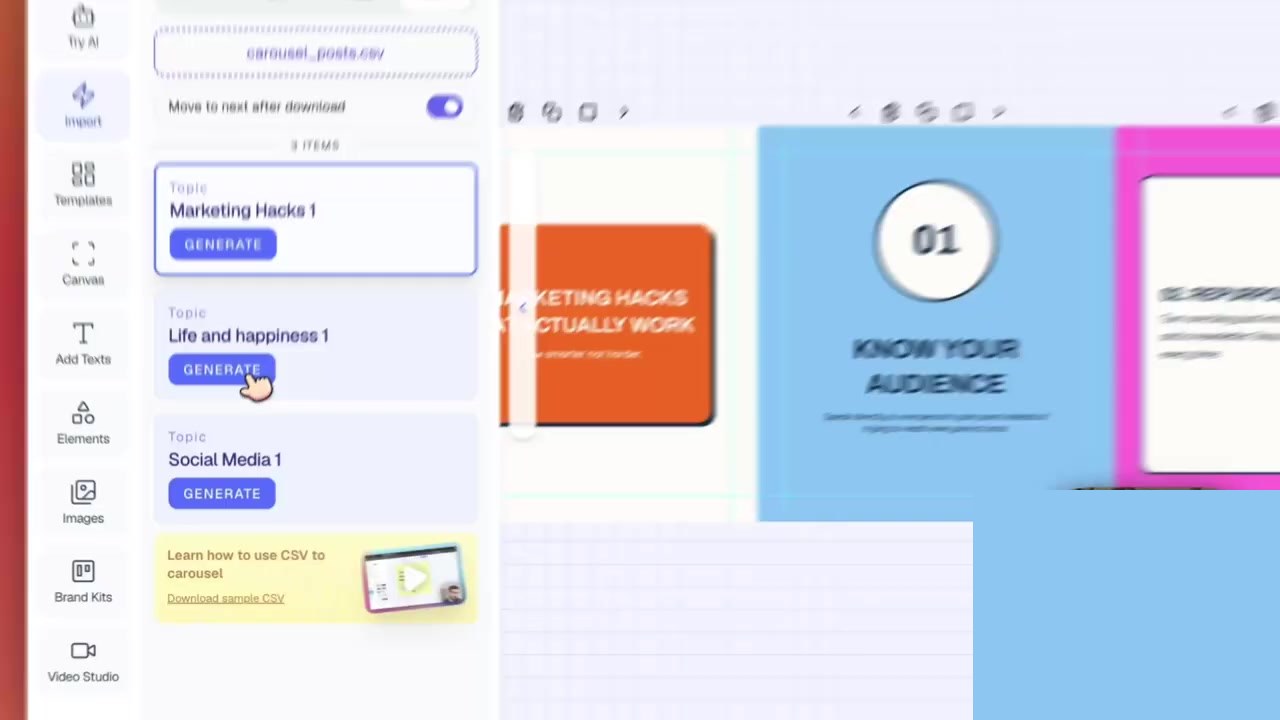
Click Generate on a topic. Contentdrips maps every CSV row onto the matching labeled fields and refreshes the whole carousel on the canvas.
Tweak anything that still needs a human pass — a tighter hook, a swapped image, a stronger CTA — then download as PNG (great for Instagram) or PDF (LinkedIn document posts). With “Move to next after download” on, you jump straight into the next topic.
Bonus: repurpose blogs and text posts the same way
Already have a blog post or a stack of text posts? Paste the source into Claude or ChatGPT along with the Automate CSV prompt and ask it to turn the material into multiple carousel items. Same Import → Generate loop in Contentdrips.
If you want the product overview and sample format in one place, see the CSV to Carousel page.
Why this workflow wins
- Speed — write once in Claude/ChatGPT, generate many carousels from one CSV.
- Template-accurate prompts — Automate copies a prompt that already matches your labels.
- Brand consistency — one labeled template drives every carousel in the batch.
- Editable output — every generated carousel stays fully editable on the canvas before you download or publish.
Ready to try it? Open a carousel template in Contentdrips, click Automate, copy the prompt, and run your next batch with Claude or ChatGPT.

Muhammad Usama Khalid is the Founder and CEO of Contentdrips, building the platform since 2019 to help creators write, design, and publish social content in one place. He has a sharp sense of what makes carousels, posts, and graphics perform across platforms like Instagram and LinkedIn. Under his lead, Contentdrips has grown to serve over 100,000 creators worldwide.