LinkedIn has changed. And if your posts feel like they’re going nowhere, getting 12 likes, mostly from your first-degree connections, and then dying, you’re probably still playing by 2023 rules.
The platform crossed 1 billion users and completely overhauled its algorithm. What used to work (engagement bait, hashtag stuffing, posting daily and hoping for the best) is now actively penalized. The flip side? If you understand what the new LinkedIn actually rewards, you can build real reach, real trust, and real results … without becoming a full-time content creator.
This guide gives you ten concrete things to do differently right now, backed by the most recent data available.
1. Hook Them in the First Two Lines or Lose Them Forever
LinkedIn only shows the first 2–3 lines of your post before the “See More” button. According to LinkedIn creator analytics, 65% of users decide whether to expand a post based solely on the opening line. And because the algorithm tracks “See More” clicks as a major signal in the first 30 minutes, your hook doesn’t just determine readership. Rather, it determines reach.
Here are the four hook types that consistently outperform everything else, and the reason each one works:
🏆 Best performer: Contrarian / Pattern-break hook
“Posting every day is killing your LinkedIn reach. Here’s why.”
This works because it interrupts a pattern your reader already has. They’ve been told to post consistently. You’re saying the opposite. Their brain can’t scroll past that. It needs to resolve the contradiction. Analysis of 1,000+ posts found contrarian hooks outperform all other types by 2.3x in engagement rate.
Strong runner-up: Curiosity gap
“I made one small change to my LinkedIn posts. Reach went up 4x in 3 weeks.”
You’ve introduced a result but withheld the explanation. The reader has to click. This works because incomplete information creates mild discomfort and people resolve discomfort by clicking.
Also effective: Specificity hook
“Here are the 7 exact words I cut from every LinkedIn post before publishing.”
Specificity signals credibility. “7 exact words” feels more real than “some tips.” The more specific the claim, the more the reader believes there’s real substance behind it.
Solid but overused: Direct question
“What’s the biggest mistake you’ve made hiring your first employee?”
These work when they target a very specific pain point. Generic questions (“What do you think about leadership?”) get ignored. Pointed ones that surface an uncomfortable truth still pull engagement.
One practical rule: Keep your hook under 10 words whenever possible. Posts with short openers outperform longer ones by 40%, especially on mobile where over 60% of LinkedIn is now consumed.
2. Write for the Reader Who’s Skimming (Because They All Are)
LinkedIn users are professionals. They’re busy, they’re context-switching, and they have zero patience for posts that bury the point. The good news: posts under 200 words used to get more engagement, but the 2025 algorithm actually rewards longer posts if they keep people reading.
The key word is if. Length is only rewarded when it holds attention. Here’s how:
- Short paragraphs. Two sentences, then a line break. Never more than three. White space is not wasted. Instead, it’s what makes people keep going.
- One idea per paragraph. Don’t stack two insights in the same block. Readers skim to the next break.
- Say what you mean immediately. Don’t build up to the point. Lead with it, then support it.
- Cut the throat-clearing. “I’ve been thinking about this a lot lately and wanted to share some thoughts on…” Delete all of that. Start with the substance.
The test: if you deleted the first sentence of your post and the meaning didn’t change, delete it.
3. Understand What the Algorithm Actually Measures Now
This is the one most people get wrong and it’s changed significantly.
LinkedIn’s algorithm (which it internally calls “Nexus”) no longer just counts likes and comments. Here’s the actual weighting, based on Richard van der Blom’s analysis of 1.8 million posts:
Saves are now the single highest-value signal. One save drives approximately 5x more reach than a like and 2x more than a comment. When someone saves your post, they’re telling the algorithm: this is worth coming back to. That’s the signal LinkedIn wants to reward.
Substantive comments (15+ words) carry 2.5x more algorithmic weight than short ones. Generic comments like “Great post!” are now classified as noise and may actually be penalized. Write posts that make people want to say something real.
Dwell time is massive. Posts where people spend 61+ seconds reading achieve a 15.6% engagement rate, compared to just 1.2% for posts people scroll past in under 3 seconds. The algorithm knows if someone paused. Make your post worth pausing on.
External links are actively penalized. LinkedIn doesn’t want people leaving the platform. If you need to share a link, put it in the first comment and not in the post body.
And the golden window is real: the first 30–60 minutes after posting determine whether your content gets amplified or plateaus. If you post and go offline, you’re handicapping your reach.
4. Write Posts Worth Saving, Not Just Liking
Given what we now know about saves being the top signal, this should change how you think about every post you write.
Ask yourself before publishing: Would someone save this to use later?
The content types that earn saves consistently:
- Practical frameworks: “Here’s the 3-question framework I use before every client call”
- Checklists and processes: things people want to reference, not just read once
- Counter-intuitive data: surprising stats that people want to share in their own conversations
- Specific case breakdowns: “Here’s exactly what I changed, and here’s the result”
Notice what’s missing from that list: opinions, motivational quotes, and “here are my thoughts on X” posts. Those get likes. Frameworks and processes get saves, and saves get reach.
5. Build Niche Authority, Not Just Visibility
LinkedIn’s 2026 algorithm shifted from a “Social Graph” model (showing content based on who you know) to an “Interest Graph” model (showing content based on what topics people follow). This is a fundamental change.
What it means for you: posting consistently about one area builds compounding authority. If LinkedIn’s algorithm learns that you always write about B2B sales, or supply chain, or UX design, it starts routing your content to people interested in those topics even if they don’t follow you yet.
Scattered content like posting about leadership one week, personal finance the next, then a travel photo, confuses the algorithm. It can’t place you, so it doesn’t amplify you.
Pick your lane. Own it. Let the algorithm learn who you are.
And one more thing: personal profiles dramatically outperform company pages. Company pages receive roughly 5% of user feed allocation. Personal profiles get 65%. If you’re a founder, marketer, or professional building a brand, your personal account is your highest-leverage channel and not your company page.
6. Use Visuals That Make People Stop. Don’t Just Fill Space
Posts with visuals get 3x more engagement than text-only posts on average. But not all visuals are equal in 2025–2026.
Document carousels (PDF posts) are the clear winner right now. In multiple independent analyses, PDF-format carousels achieved engagement rates nearly 4x higher than other post types. They hold attention longer (great for dwell time), they’re highly saveable, and they’re a format LinkedIn’s algorithm actively rewards.
Short-form video (under 90 seconds) is rising fast. LinkedIn video views grew 36% year-over-year, and the platform added a TikTok-style vertical video feed. On-camera video is particularly effective for trust-building and seeing a real person speak creates a connection that text simply can’t replicate.
Authentic images outperform stock photos every time. A photo from your actual office, your actual team, or your actual work signals realness. Stock imagery signals “I had nothing real to show.”
Infographics work well for making a data-backed claim visual. If you’re going to post a statistic, show it and don’t just write it.
And don’t sleep on text posts. A well-structured, specific text post can absolutely hold its own, especially when it’s paired with a visual. The combination of a sharp written post plus a carousel hits dwell time, saves, and comments all at once.
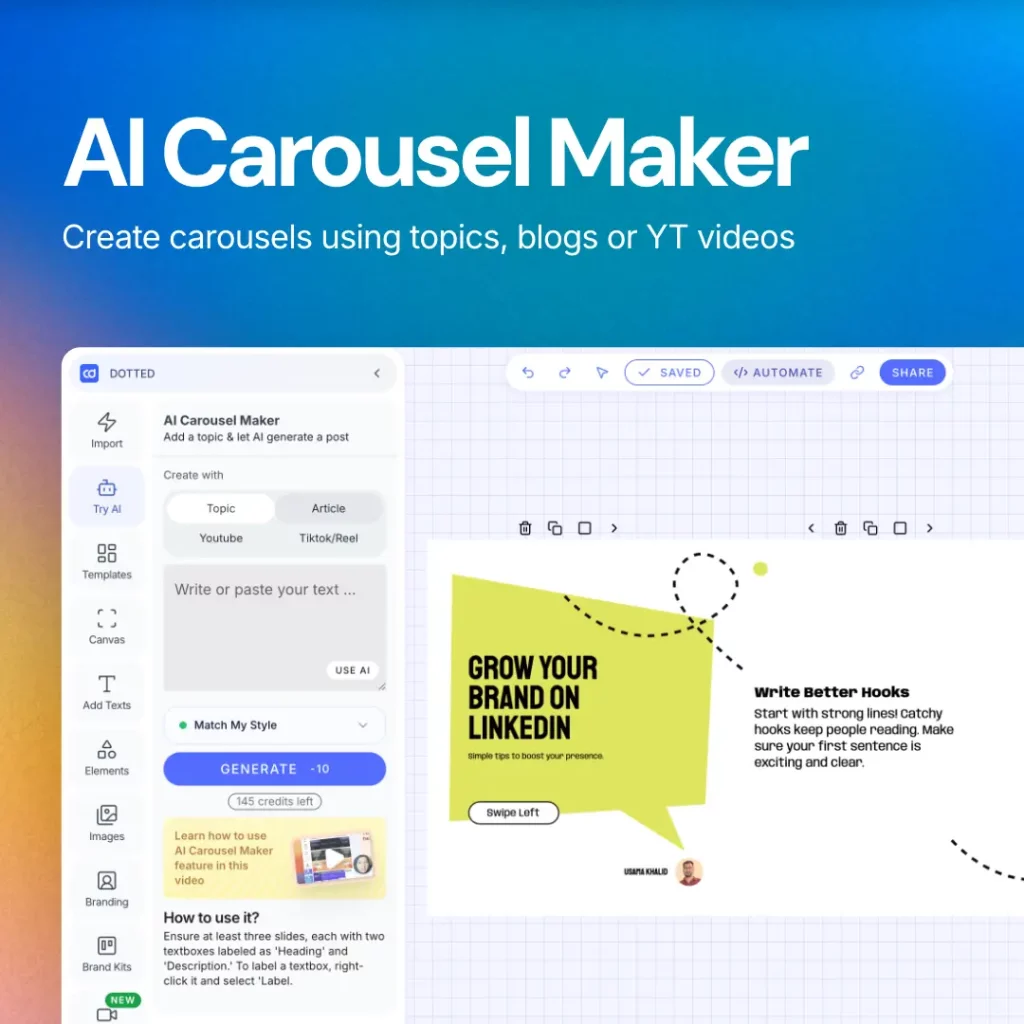
💡 Create faster with Contentdrips. Use the AI Design Agent to generate a complete, on-brand post design in seconds. Just describe what you want and it builds it for you. Or browse ready-made LinkedIn templates and customise one to match your content. Either way, you’re posting something that looks good without the design time.
7. Tag Strategically and Not Desperately
Tagging people boosts visibility by notifying them and potentially pulling their network into your comments. Posts that tag relevant people see up to 56% higher engagement rates.
The operating word is relevant.
Tag people who:
- Were actually involved in what you’re writing about
- Made a point you’re building on (with attribution)
- Would genuinely find the topic valuable and might add to the conversation
Don’t tag people just to get their attention. LinkedIn’s algorithm can detect over-tagging patterns, and readers notice too. Being tagged in irrelevant posts feels like spam as it damages the relationship, not builds it.
Keep it to 2–4 people per post, maximum.
8. End With a Call-to-Action That Earns a Response
Every LinkedIn post should close with a question or direction. Posts with CTAs generate 2x more comments and shares than those without.
But here’s the nuance the original advice misses: your CTA has to earn a response, not beg for one.
Bad CTA (engagement bait is now penalized):
“Comment YES if you agree!”
Bad CTA (too vague):
“What do you think?”
Good CTAs:
“What’s the one thing you’d add to this list?” “Has this happened to you? Tell me in the comments. I’m genuinely curious how others handled it.” “I’m planning to write about [related topic] next. What’s your biggest question on it?”
The difference is specificity and genuine openness. You’re not performing engagement. You’re actually asking something you want answered. Readers can feel that distinction.
9. Tell Specific Stories, Not General Lessons
In 2026, the most shared posts weren’t thought leadership essays. They were specific stories.
A founder sharing the exact month their company almost ran out of runway. A marketer breaking down the campaign that flopped with actual numbers. A sales leader showing the exact email sequence that finally closed a deal they’d been chasing for eight months.
Specificity is the differentiator. Vague “lessons I learned” posts are ignored. “Here’s exactly what went wrong, and here’s the number” posts spread.
This works because specificity signals truth. Anyone can claim a lesson. Fewer people have the exact date, the exact number, the exact conversation. When you include those details, readers believe you and they share content they believe.
Storytelling posts are also 22x more memorable than data-driven posts. Your expertise needs to be remembered, not just acknowledged.
Structure to steal:
- Open with the specific moment (the meeting, the decision, the failure)
- Share what you expected vs. what happened
- Explain what you did next
- Give the one transferable takeaway
Keep it anchored to a real moment. That’s what makes it land.
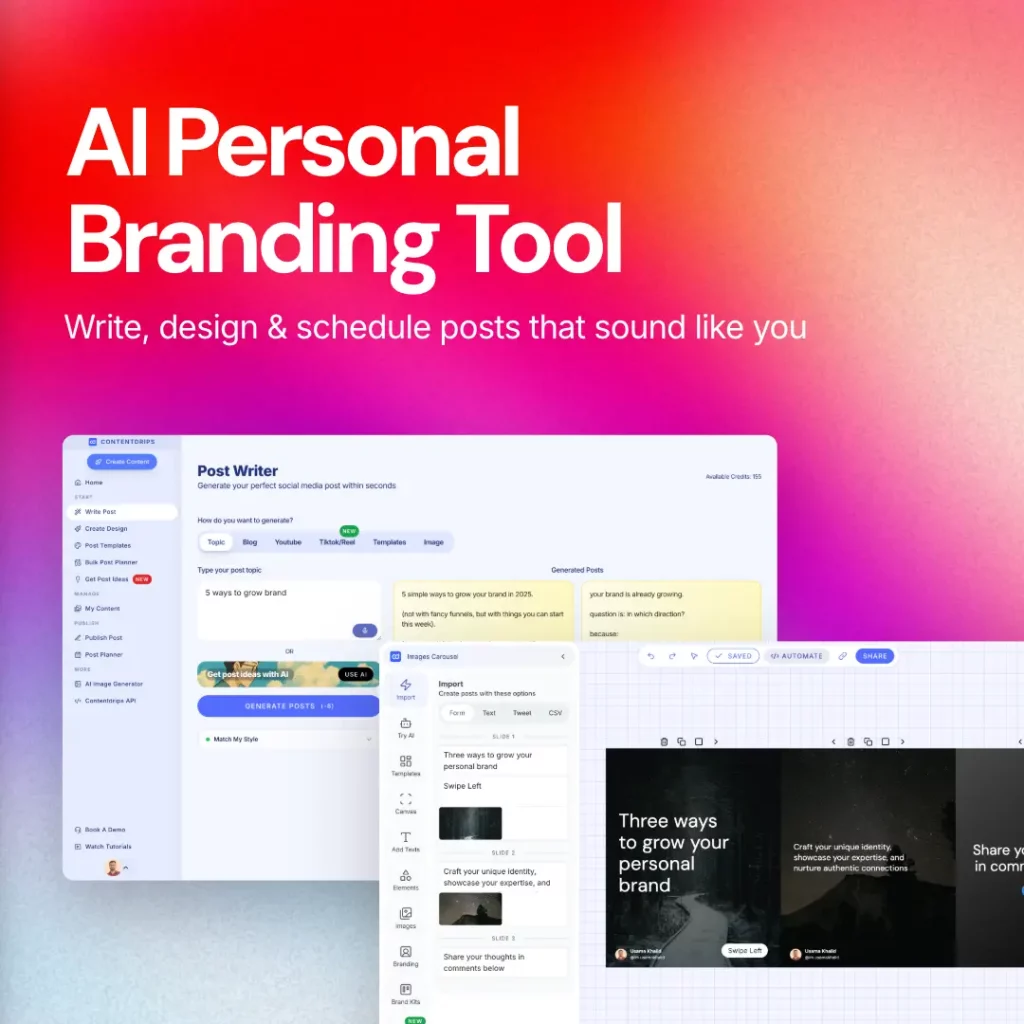
✍️ Turn your story into a post in minutes. Contentdrips’ AI Post Writer can generate a LinkedIn post from a topic, a blog, a video, or even a raw idea and with Match My Style, it writes in your voice, not a generic AI tone. Drop in the gist of your story and let it do the heavy lifting.
10. Post at the Right Time. Then Stay Active in the First Hour
Timing still matters, but not in the way most people think. The best posting times based on current data:
- Tuesday, Wednesday, Thursday are consistently the highest-engagement days
- 8–9 AM (when people start their workday) and 12–2 PM (lunch) remain peak windows
- Thursday evening (after 6 PM) has emerged as a strong secondary window
But here’s what the data says that most guides skip: what you do in the first 60 minutes after posting matters as much as when you post. Respond to early comments. Engage with other posts right after publishing. Signal to the algorithm that there’s a live conversation happening.
Posts that gain strong engagement in the first hour get pushed to 2nd and 3rd-degree connections. Posts that sit quiet in the first hour plateau regardless of quality.
Use LinkedIn Analytics to find your personal peak times based on your specific audience. Generic benchmarks are a starting point, not a rule.
Put It Together: Write Your Next Post With Contentdrips
Knowing all of this and executing it consistently are two different things. The gap is usually not knowledge. Instead, it’s the friction of sitting down, writing something good, and making it look polished enough to post.
Contentdrips’ AI Post Writer is built specifically for LinkedIn content. You can generate a post from a topic, a blog article, a YouTube video, a TikTok/Reel, or even just an idea, and the output is built around LinkedIn’s format requirements, not generic social copy.
What makes it different from just using any AI tool:
Match My Style learns from your past content. It picks up your tone, your sentence structure, your voice and makes sure every new post sounds like you, not like a chatbot. If you’ve built a personal brand, this is how you scale it without losing what makes it work.
And here’s where it compounds: pair your written post with a carousel. The post creates the hook and the narrative. The carousel gives people something visual to swipe through, save, and share. Together, they hit all three of LinkedIn’s highest-weighted signals: dwell time, saves, and substantive engagement. You can write the post and create the carousel in the same workflow, keeping your message consistent across both.
Generate your next LinkedIn post → app.contentdrips.com/make-post
Quick Reference: What Actually Works in 2026
| Signal | Weight | What to Do |
|---|---|---|
| Saves | 🔥🔥🔥🔥🔥 Highest | Write posts worth bookmarking (frameworks, processes, data) |
| Long comments (15+ words) | 🔥🔥🔥🔥 Very high | Ask specific questions that invite real responses |
| Dwell time | 🔥🔥🔥🔥 Very high | Use white space, pacing, and structure to keep people reading |
| Short comments / likes | 🔥🔥 Low | Don’t optimise for these |
| External links | ❌ Penalized | Put links in first comment, not the post body |
| Engagement bait | ❌ Penalized | Never “Comment YES if you agree” |
Frequently Asked Questions
How long should a LinkedIn post be in 2026? There’s no single right length. Short posts (under 200 words) work well for quick opinions or observations. Longer posts (800–1,500 characters) work better for stories and frameworks but only if they hold attention throughout. The algorithm rewards dwell time, not word count. Write as long as the content genuinely needs to be.
How many hashtags should I use? Between 1 and 3, and make them specific to your niche. Research from 2025–2026 shows hashtags have weakened significantly as a distribution lever ; they’re no longer the reach multiplier they once were. Focus on niche-specific hashtags over broad ones like #Leadership or #Business.
Does posting frequency matter? Quality beats frequency. Most people see the best results posting 2–5 times per week. Posting every single day can actually cause your posts to compete with each other. If you post twice in the same day, LinkedIn suppresses the earlier one. Consistency over time matters more than daily volume.
Should I use LinkedIn polls? Polls get high impressions (good for visibility) but declining engagement as of 2025–2026. People see them, they don’t click. Use them occasionally to build reach into a new topic, but don’t rely on them as your primary format.
Does it matter if I use an AI writing tool for posts? The content is what matters, not how it was produced. LinkedIn doesn’t penalize AI-written posts. What it does penalize is low-quality content that doesn’t hold attention. Use AI tools to write faster and better, not to publish more generic content at volume. Always edit for your voice.
What’s the single highest-leverage change I can make today? Start ending your posts with a specific, genuine question and respond to every comment in the first hour. Those two habits alone will improve your reach significantly, because you’re directly feeding the signals LinkedIn weights most: substantive comments and early engagement velocity.
Why do my posts get likes but no reach? Likes carry very little algorithmic weight now. The platform rewards saves, substantive comments, and dwell time. If you’re getting likes but not reach, your posts are probably likeable but not saveable. Add a specific framework, a useful process, or a detailed breakdown, something people will want to come back to.
Can I post the same content more than once? Yes, LinkedIn’s longer content lifespan (posts now stay active for 2–3 weeks) means you shouldn’t repost immediately. But repurposing older high-performing posts into a new format (like turning a text post into a carousel) is highly effective and recommended.
Ready to write your next post? Start here: app.contentdrips.com/make-post