A promotion is one of the few moments in your career where sharing publicly is not just acceptable but rather it is genuinely useful. It signals growth to your network, reinforces your personal brand, and opens doors with people who might not have known what you were capable of.
And yet most promotion posts read exactly like new job posts, new baby announcements, and every other life update on LinkedIn: generic, safe, and immediately forgettable.
The reason? People treat a promotion post as a formality rather than an opportunity. This guide will help you treat it as the opportunity it is.
Why Promotion Posts Are Uniquely Powerful (and Uniquely Tricky)
A promotion post is different from a new job post in one important way: the story behind it is entirely yours. You did not just accept an offer; you earned something over time. That arc, that proof of work, that specific thing you did or became make up the post.
The tricky part is writing about your own achievement without sounding like you are bragging. The answer is not to be falsely modest. It is to be specific and honest about the work rather than the title.
Nobody cares that you got promoted to Senior [Title]. What they care about is the human story behind it.
8 Tips for Writing a LinkedIn Promotion Post That Earns Genuine Engagement
1. Talk about the work, not the title
The title is the least interesting part of a promotion. What is interesting is what you actually did to get there. What problem did you own? What did you build, fix, lead, or figure out? Write about that and the promotion becomes proof, not the point.
2. Name the moment it clicked
Every promotion has a turning point which led to it: a project that changed how your manager saw you, a skill you had to develop under pressure, a moment you stopped waiting to be given responsibility and just took it. Find that moment and open with it. It is far more compelling than “I am thrilled to share.”
3. Be honest about what the role actually means
Not in a “this is a huge responsibility” way because that is filler. In a “here is specifically what changes and why that is meaningful to me” way. What decisions will you now own? What are you taking on that you did not do before? That specificity shows professional depth.
4. Acknowledge the people who genuinely helped and let us know how they helped
If a manager gave you a chance that changed your trajectory, say so. If a peer taught you something critical, say so. But be specific. “Thank you to my amazing team” means nothing. “My manager let me lead the [X project] when I had no business leading it, and that single decision changed everything” is something that lands.
5. Do not start with “I am excited/humbled/honoured to announce”
Every promotion post starts this way. It is the LinkedIn equivalent of clearing your throat before speaking. Your audience has already tuned out. Start with the story or the moment instead.
6. Reflect on what you learned, not just what you achieved
A post that says “I learned X the hard way over the last two years and it is why I am ready for this role” is infinitely more engaging than a post that just announces a new title. Learning shows self-awareness. Self-awareness builds trust. Trust builds a following.
7. Keep it proportionate
A promotion to team lead does not need a 400-word reflection on your entire career. Match the length of the post to the significance of the moment. Sometimes three well-written paragraphs are far stronger than a long-form essay.
8. End with something forward-looking and specific
Where are you headed? What are you building toward? What is the next challenge you are staring down? End with a sentence that makes your network feel like they are watching a story unfold before them, not just reading a resume update.
Fill-in-the-Blank Templates
Template 1: The Work-First Post
Two years ago, I was handed [specific project or responsibility] with [honest context — limited resources, no playbook, a steep learning curve].
I got it wrong [specific number or description] times before I got it right.
Today I have been promoted to [New Title] at [Company].
What I know now that I did not know then: [one specific professional lesson].
Thank you to [specific person] for [specific thing they did]. It mattered more than they know.
Now on to [one sentence about what comes next].
Template 2: The Honest Reflection Post
I did not see this promotion coming. Not because I was not working toward it — but because [honest reason: you were heads down, you doubted yourself, you were focused on the work not the title].
[New Title] at [Company] as of [this week/this month].
The thing that got me here was not [the obvious thing]. It was [the real thing — a habit, a decision, a skill].
To anyone earlier in their [industry/career stage] — [one piece of specific advice from your experience].
[Optional: tag someone who helped you or close with a question for your network].
Template 3: The Concise and Sharp Post
[Company] just gave me a new title: [New Title].
The real story: [two sentences on what the last X months actually looked like].
What I am taking into this role: [one specific thing — a belief, a skill, a lesson].
What I still have to figure out: [one honest admission].
Happy to talk about [relevant topic] if you are working through something similar.
Mid-Point: Struggling to Find the Right Words?
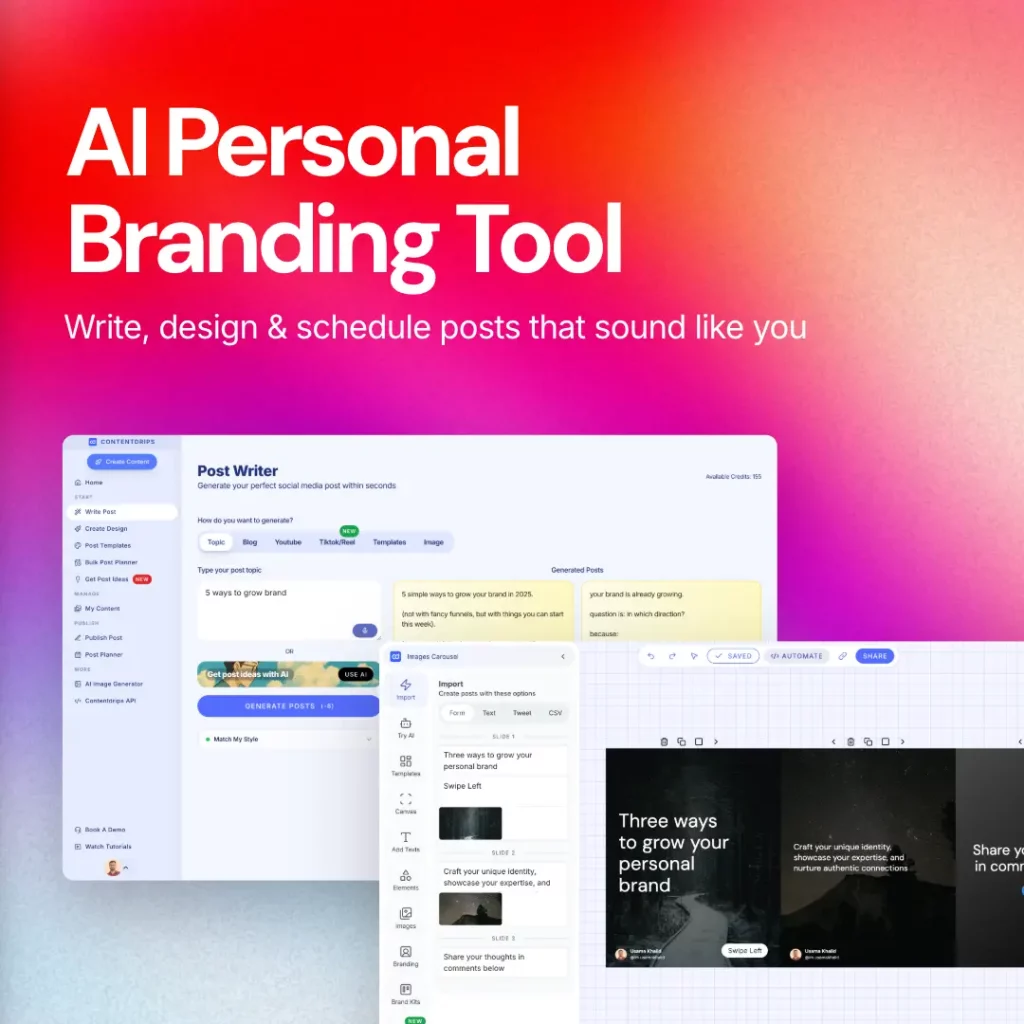
Promotion posts are hard to write because you are writing about yourself and most people are not wired to do that comfortably. Contentdrips’ AI Post Writer helps you get past that block. Drop in your rough thoughts: what happened, who helped, and what you learned. It shapes them into a post that sounds like you, not a press release.
→ Write your promotion post with Contentdrips
What to Avoid
Avoid the promotion-as-destiny narrative. Posts that read like the writer always knew they would get here are exhausting. Humility and honesty are far more engaging than a polished origin story.
Avoid listing every responsibility in the new role. This is a LinkedIn post, not a job description. One clear sentence on what the role entails is enough.
Avoid making it about the company. This is your moment — not an ad for your employer. One line mentioning the company is plenty.
Avoid posting the day it is announced internally. Sit with it for a day. Write from a place of clarity, not the adrenaline of the moment. The posts written in the first rush of excitement are usually the ones people regret.
The Difference Between a Post People Remember and One They Scroll Past
The promotion posts that get saved, shared, and commented on are not the most polished ones. They are the most honest ones. The ones where you can feel that a real person wrote it from a real place.
Your promotion is proof of something you did, built, or became over time. Write from that place and not just from the title. The post will take care of itself.
→ Got your promotion but stuck on how to announce it? Use Contentdrips to turn your rough thoughts into a post that actually sounds like you.